Before 2022, the idea that commercial satellite imagery would serve as a real-time battlefield intelligence source was theoretical. After 2022, it was operational fact. During the conflict in Ukraine, commercial providers delivered imagery that shaped operational decision-making at a scale and speed that national technical means alone could not have matched. The intelligence community noticed. So did we.
The implications for investment are significant and still not fully absorbed by most defense-focused capital. Commercial ISR isn't replacing government satellite systems — it's expanding the aperture of what's possible and democratizing access to intelligence products that were previously the exclusive province of intelligence agencies.
What Changed
Three converging developments drove the transition from theoretical capability to operational relevance.
Constellation density. Getting useful repeat coverage of a target requires satellites, plural, in orbits that provide the revisit rate needed for actionable intelligence. Constellations in the 50 to 200 satellite range — achievable by commercial operators at a fraction of what a national program would cost — can deliver sub-24-hour revisit globally and hourly revisit over priority areas. That's a fundamentally different collection posture than what government systems could maintain.
Resolution democratization. Sub-50-centimeter resolution imagery, which until the mid-2010s required a national program to produce, is now commercially available. More importantly, it's available at the volume that intelligence analysis actually needs — not one frame over a target area, but continuous collection that enables change detection and pattern-of-life analysis.
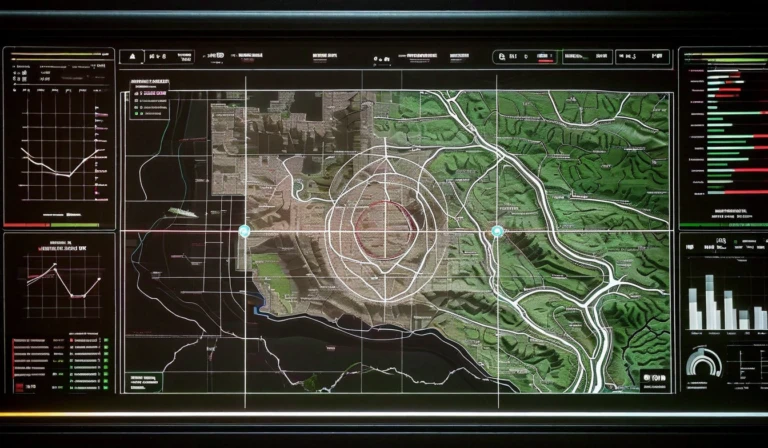
Analytics at scale. The images are valuable; the analysis is decisive. Machine learning approaches to satellite imagery analysis have matured to the point where software can process collection across an entire theater of operations, flag anomalies, and surface relevant changes faster than human analysts working the same dataset manually. The intelligence product is no longer raw imagery — it's interpreted, contextualized, and actionable.
The Investment Landscape
We categorize commercial ISR investment opportunities across three tiers, each with different risk and return profiles.
| Tier | Companies | Capital Intensity | Contract Path |
|---|---|---|---|
| Constellation operators | Satellite bus + launch + operations | Very high ($200M+) | NRO, NGA, Five Eyes |
| Sensor developers | Novel collection modalities (SAR, RF, hyperspectral) | High ($50–150M) | IC agencies, allied programs |
| Analytics platforms | Imagery processing, change detection, GEOINT software | Moderate ($10–40M) | DIA, SOCOM, NATO allies |
Our focus tends toward the analytics tier and novel sensor tier. Constellation operating is largely a capital formation exercise at this point — the major commercial operators are either public or approaching late-stage private rounds. But the software layer and the sensor layer still have room for early-stage positioning with defensible technical moats.
Where the Hard Problems Are
The technology is not uniformly mature. Several areas where commercial ISR still has significant headroom — and therefore significant investment opportunity — stand out.
Synthetic aperture radar. Optical imagery has a cloud cover problem that anyone who has waited for clear-sky collection over a priority area understands viscerally. SAR collects through clouds, at night, in any weather condition. The commercial SAR market is less mature than the optical market, and the sensor miniaturization required to get SAR onto small satellite bus form factors is genuinely difficult. Companies making real progress here are solving a constraint that limits every commercial ISR operator.
Multi-modal fusion. The real intelligence value isn't in any single collection modality — it's in fusing optical, SAR, RF, and other sources into a coherent picture of what's happening in a target area. The fusion software that does this reliably, at scale, without requiring armies of analysts to validate outputs, is still an open problem.
Secure dissemination at the edge. Getting intelligence products from the satellite, through processing, to the warfighter at the tactical edge — with appropriate classification handling — involves a chain of handoffs that commercial systems weren't designed to support. The government-commercial interface here is still early, and it's where a lot of operational value gets lost.
We've spent time with imagery analysts who've described getting commercial satellite data as transformative — not because it was better than government systems in every dimension, but because it was available, accessible, and fast in ways that government collection pipelines are not built to be.
Looking Forward
The commercial ISR market is on an irreversible trajectory. The NRO's commercial GEOINT strategy, which formally embraces commercial imagery as a complement to national technical means, signals that the government has accepted this reality and is building procurement frameworks around it. Annual commercial imagery spending by the intelligence community is likely to grow substantially over the next decade.
The question for investors isn't whether this market will scale. It will. The question is which companies have technical differentiation that survives consolidation. The analytics and sensor tiers are where that differentiation still exists at valuations that make sense for early-stage defense venture. That's where we're focused.