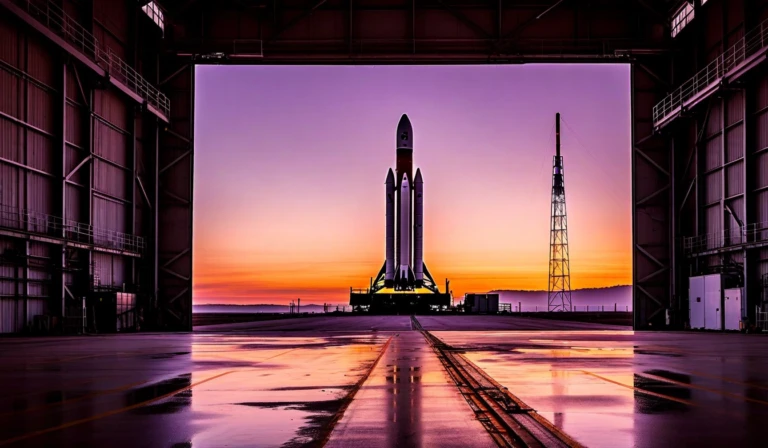
The original space race was a government program. Two superpowers, state budgets, national prestige. The defining decisions were made by politicians and program managers, not investors. Commercial entities participated — primarily as cost-plus contractors — but the capital and the direction came from governments.
The current space race looks nothing like that. The capital driving orbital infrastructure, launch capability, and space-based services is predominantly private. Government customers — DoD, NRO, NASA, allied space agencies — are buyers of commercial services. They're not directing the technology investment; they're absorbing the output of technology investment made by venture capital and private equity.
That structural shift has significant implications for investors. It means the space sector has moved from a market where the customer is also the primary funder of technology development to one where commercial capital takes the technology risk and the government provides a large, relatively stable demand base. For defense-focused investors who understand government contracting, that's a favorable structure.
Where the Defense-Relevant Market Is
Not all of the commercial space market is equally relevant to defense investment. The consumer broadband space — high-volume, low-margin, massive capital requirements — is a different investment profile than the ISR, communications, and space domain awareness markets that sit at the intersection of commercial viability and defense criticality.
The defense-relevant commercial space market clusters around three areas.
Small satellite launch. The proliferated low-earth orbit architectures that DoD is pursuing for resilience require frequent, affordable launch for both initial constellation deployment and on-orbit replenishment after attrition or obsolescence. Dedicated small satellite launch — vehicles in the 300-500kg to LEO range — serves this demand in ways that rideshare arrangements on large vehicles cannot. The launch rate needed to support proliferated LEO is substantially higher than what government launch systems can provide.
Space domain awareness. Knowing what's in orbit, where it is, and what it's doing has become a critical military capability as the orbital environment has become more congested and contested. Commercial SDA networks — ground sensors, tracking algorithms, and catalog management services — complement government Space Force tracking capabilities and extend coverage in ways the government can't fund internally at the required scale.
Tactical satellite communications. The satellite communications market has traditionally been dominated by large GEO satellites with large price tags per transponder. The proliferated LEO architecture enables a different model: lower latency, lower cost per bit, and more resilient architecture against anti-satellite threats. SATCOM companies building for defense requirements — secure waveforms, EMCON compliance, anti-jam capabilities — are addressing a gap that the traditional GEO-based providers cannot fill.
What We Screen For
The space sector has attracted a lot of capital that doesn't understand government contracting timelines. We've watched several technically capable companies struggle because their runway assumptions were built around commercial SaaS growth curves, not defense procurement cycles. A company that wins an SBIR Phase II in January shouldn't be modeling Phase III revenue before Q3 of the following year.
Our screening criteria for space investments include several factors specific to defense market dynamics:
- OTA or SBIR traction demonstrating that at least one government program office sees the technology as relevant to an active requirement
- Capital structure that gives the company 18 to 24 months of runway beyond what they've already committed from their current round — defense programs take longer than founders expect
- Technical differentiation that addresses a specific military operational requirement, not just a commercial market that happens to have potential defense applications
- Business development team with active government relationships, not just LinkedIn connections to government officials
The space market is real and it is growing. What separates investments that work from ones that don't is almost never the technology. It's whether the team understands how government money actually flows and has positioned themselves to receive it.
The Consolidation Coming
We're approaching a period of consolidation in the commercial space sector. The number of launch providers, small satellite manufacturers, and SDA companies that have been funded over the last decade is not consistent with the number of profitable businesses that will exist in the sector over the next decade. Some of those companies will produce strong returns for their investors. Many will not.
The survivors will be the companies with genuine technical differentiation, strong government relationships, and business models that actually work at DoD procurement timelines and margins. That's a selective set. Finding them early — before the consolidation makes the selection obvious — is the value of being a patient, specialized investor in this sector. We've been at it for over a decade. The pattern recognition compounds.